Every angle. Every layer.
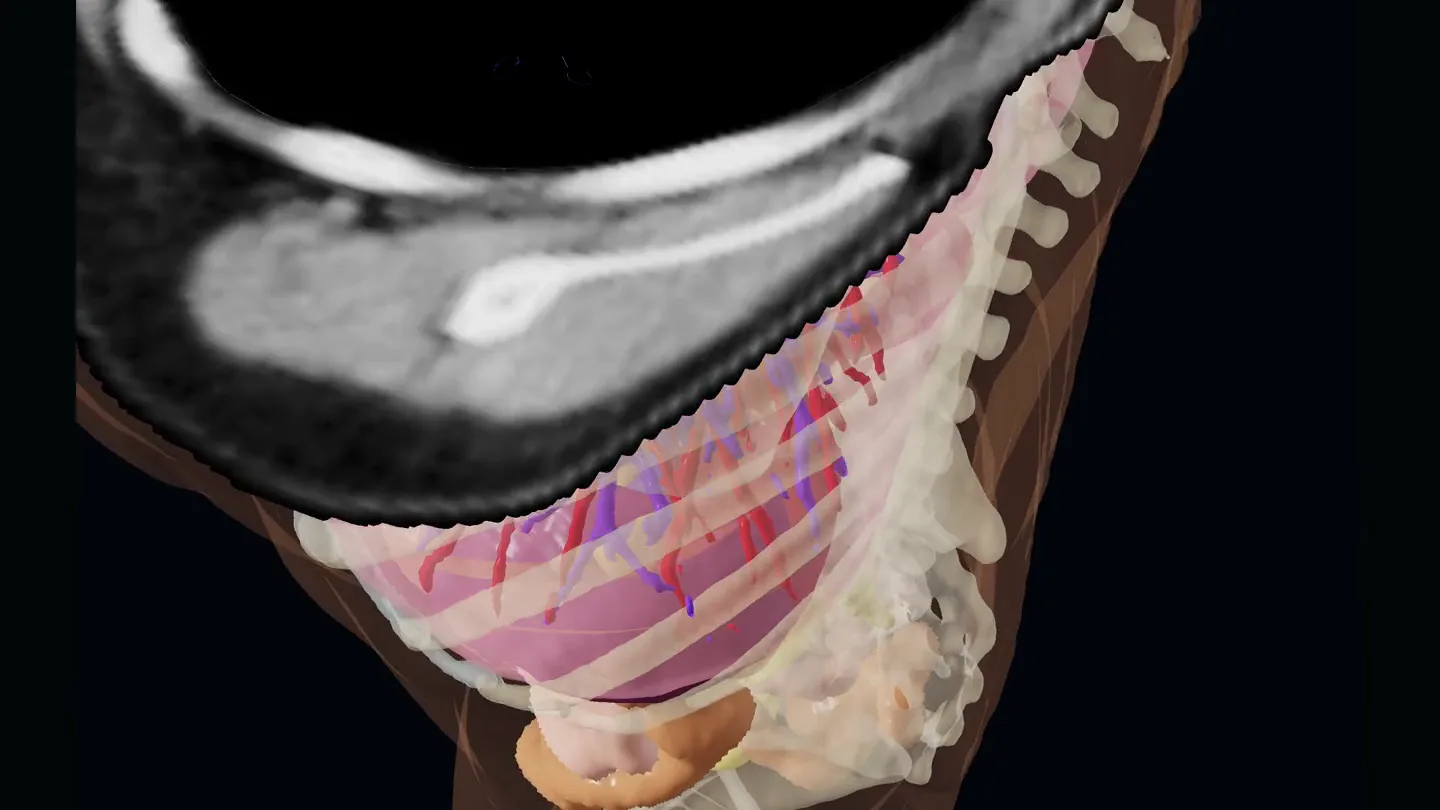
Explore axial, coronal and sagittal CT sections. Move between the 3D model and the original image, with contrast tuned to the organ.
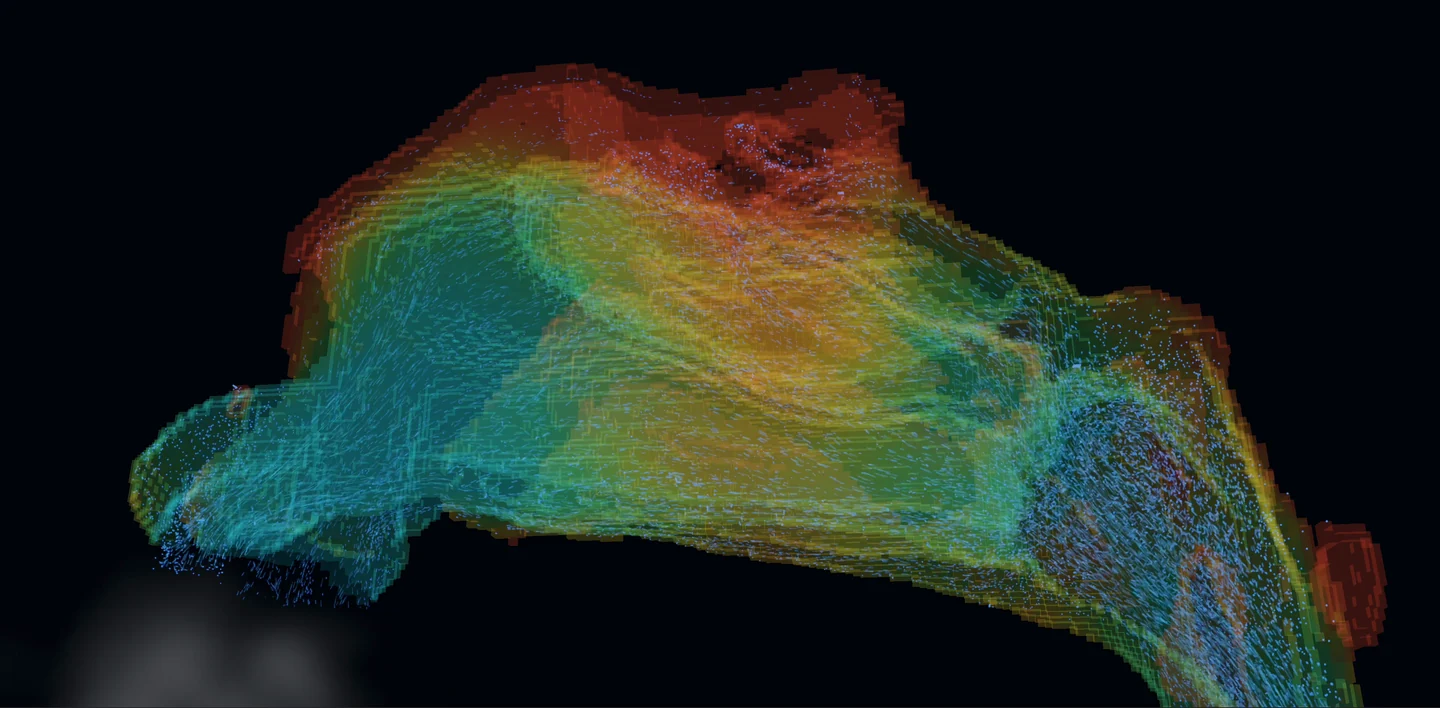
Turn your existing CT into interactive 3D anatomy on your Mac. Explore a fourth dimension—function—through research simulations of how the body works. Take a closer look at airflow and heat transfer in the Nasal Lab.
Labs are not included in the beta. If you need the Nasal Lab, fill in the collaboration form to discuss access.
Turn an existing CT into a body you can explore. Move from the shape of an organ to the structures inside it, and back to the original scan.
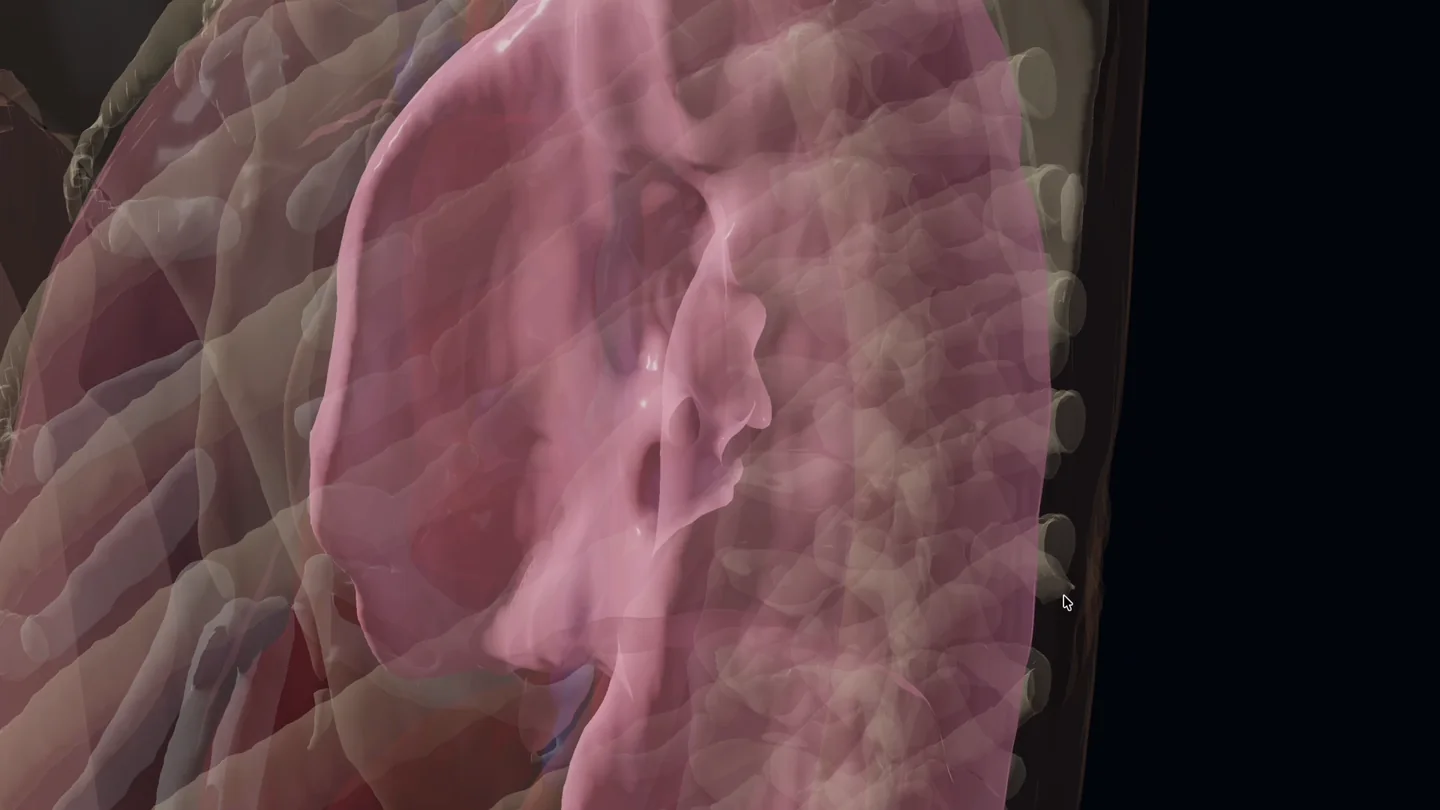
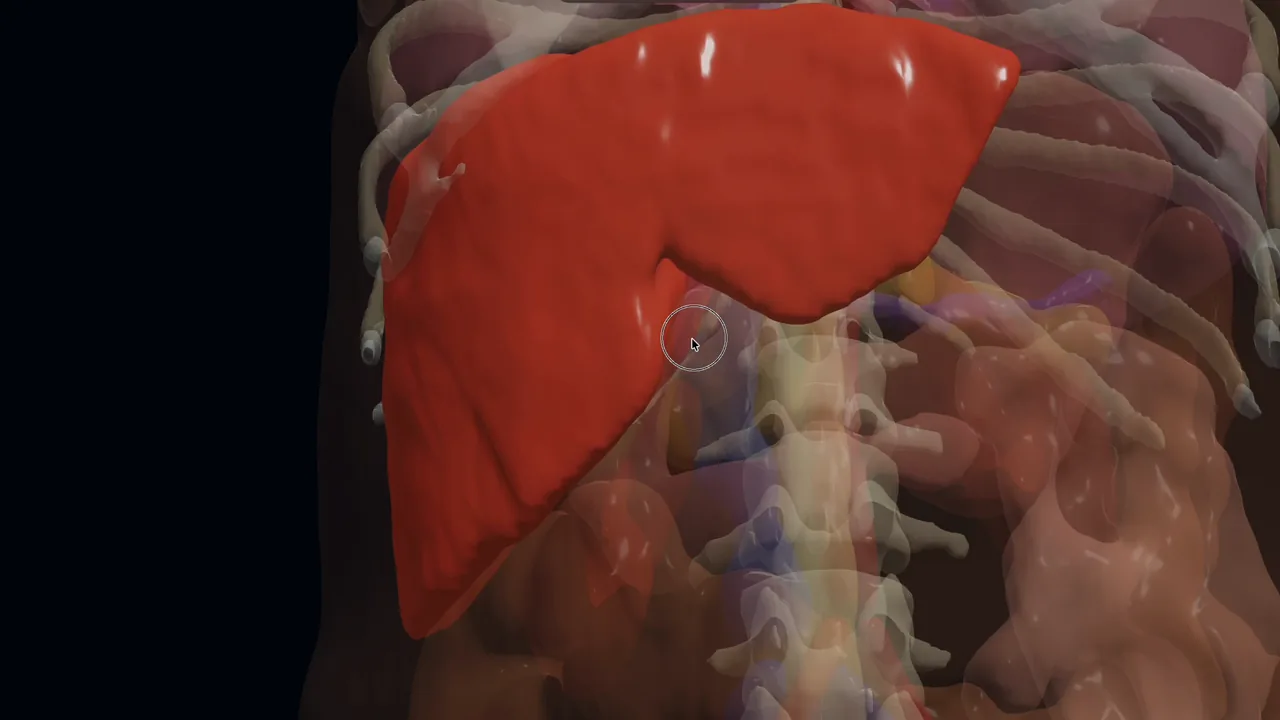 Liver · surface rendering
Explore your anatomy as a three-dimensional whole. Isolate a structure, turn it around, and understand where it sits in relation to everything else.
Explore axial, coronal and sagittal CT sections. Move between the 3D model and the original image, with contrast tuned to the organ.
Measure distances, adjust clipping planes, and reveal a structure within its surroundings. Go from the big picture to a closer inspection.
Save viewpoints, revisit your view history, and export images to help explain what you’re looking at. Manage your studies locally.
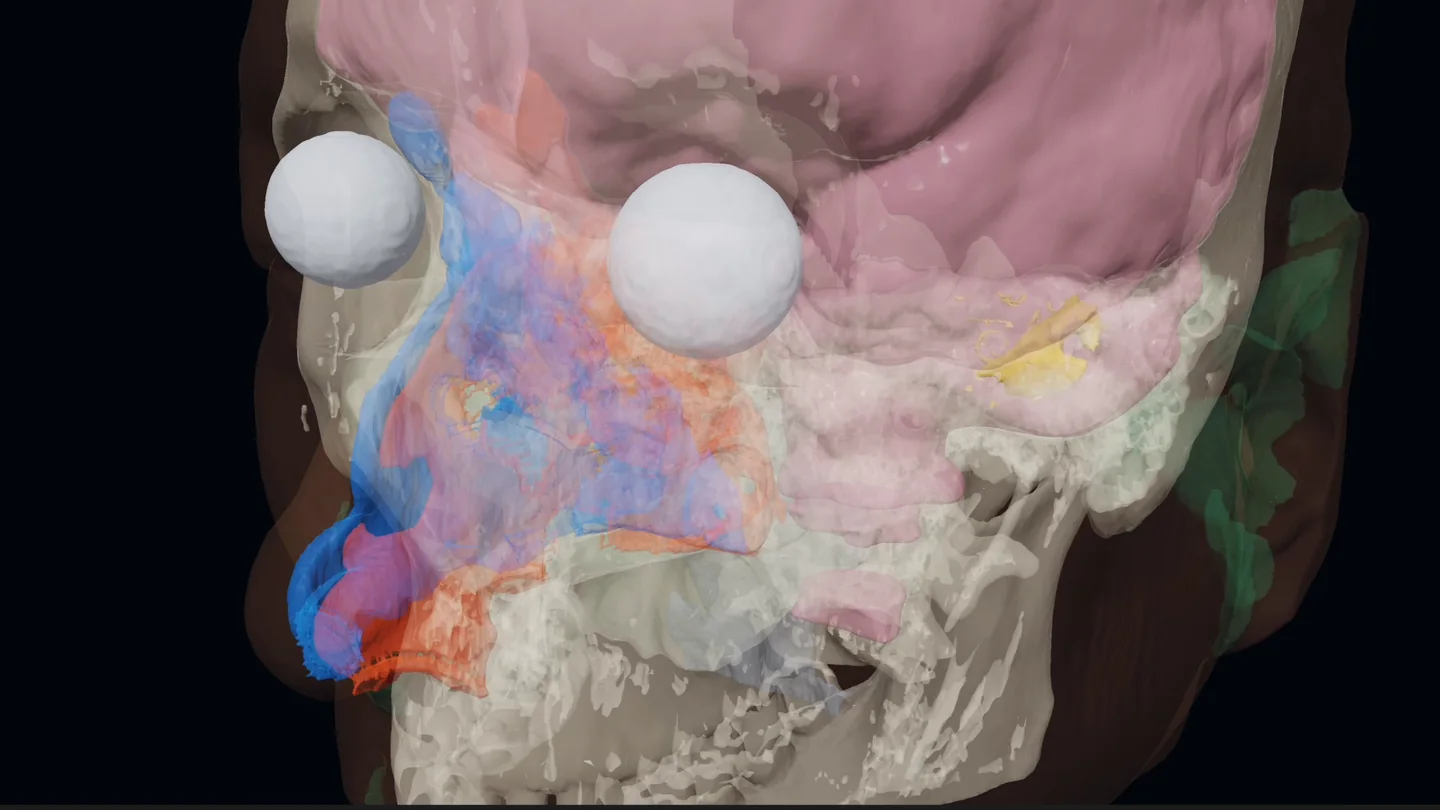
Explore the head and skull in 3D, then compare the reconstruction with the original CT sections. Available structures depend on scan coverage and recognition.
Explore organs, vessels, muscles and bones within the region covered by your scan.
A scan can hold so much information about you, yet still leave you struggling to understand what you’re seeing — or to explain what you’re feeling.
I made Body4D to help close that gap. To make anatomy easier to explore, difficult experiences easier to discuss, and our own bodies a little less unfamiliar.
When we understand our bodies better, we have more reason to appreciate them — and treat them with care.
That’s why I’m sharing it for free. Your ability to understand your own body shouldn’t depend on what you can pay.
Explore nasal obstruction, empty nose syndrome (ENS) and virtual turbinate reduction through the relationship between nasal anatomy, airflow and heat transfer.
Labs are not included in the beta. If you need the Nasal Lab, fill in the collaboration form to discuss access.
Explore nasal airflow researchBody4D starts with existing CT scans. The roadmap includes broader scan support and deeper models of tissue and airflow. These are development and research goals, to be introduced as they’re ready.
Bring existing MRI scans into Body4D, extending anatomy exploration beyond CT.
Bring historical scans together to explore how your anatomy has changed through a scan time-lapse.
Explore how soft tissue swells, deforms and settles with body position and time, beginning with the nasal lining.
Extend airflow and heat-transfer models to moisture transport, humidification and water evaporation, including evaporative cooling.
Focused spaces to explore function and virtual what-ifs, beginning with the nasal airway.
Have a question, feedback, or an idea for collaboration? I’d love to hear what’s working, what’s missing, and what you’d like to explore.
Body4D is shared freely because understanding your own body should be within everyone’s reach. If you’d like to support its development, a donation option is on the way.